
Butter Chicken vs Chicken Tikka Masala
One tandoor, two sauces, and a rivalry that runs from a Delhi kitchen to a Glasgow curry house
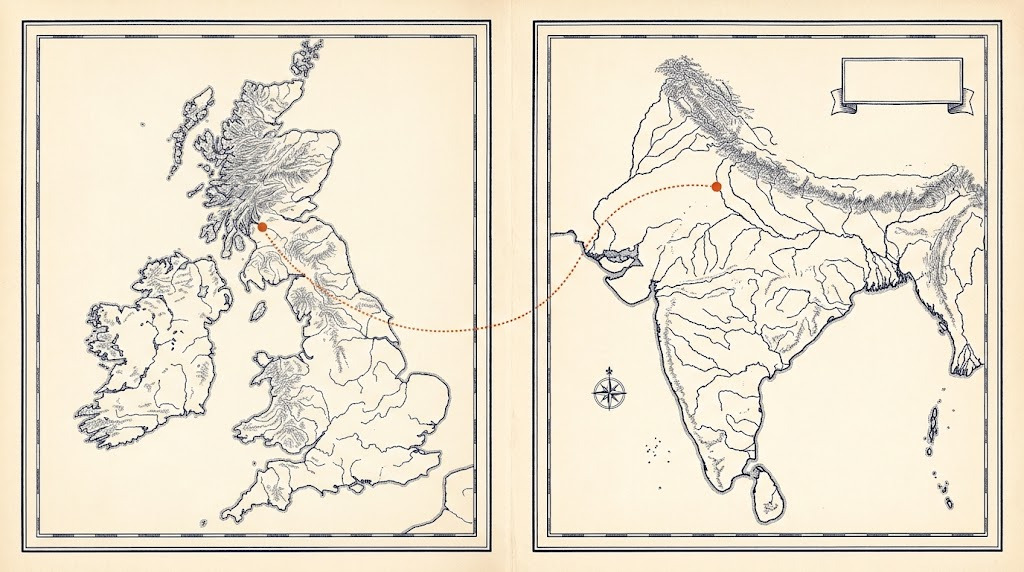
The two ends of the argument.
Butter chicken is the milder, sweeter of the two: tandoori chicken in a sauce of tomato, butter and cream. Chicken tikka masala is the spicier one, the same tandoor-fired tikka in a heavier onion-tomato masala. Butter chicken was invented in Delhi. Tikka masala, most likely, in Britain.
That is the short answer, and the one most people came for. The longer answer involves a Delhi kitchen with a stock problem, a Glasgow chef with a complaining customer, two families in the Delhi High Court arguing over a pan that went cold in 1947, and a van I should not have been in. The dishes are old. The argument is young.
Delhi, and a problem with leftovers
Murgh makhani, butter chicken, comes from Moti Mahal in Delhi, some time in the years after 1947. Three men opened it in Daryaganj that year: Kundan Lal Gujral, Kundan Lal Jaggi and Thakur Dass, who had cooked together in Peshawar and left with everything else in the Partition convoys. The Peshawar Moti Mahal had never been theirs; what they carried across was the name, the technique and the tandoor.
The tandoor’s great virtue is also its problem. Chicken cooked that fast dries out just as fast, and at the end of a service that kitchen was left with skewers of tandoori chicken stiffening on the pass. The fix was a sauce: tomatoes, butter, cream, a restrained hand with the spices, and the chicken warmed through in it until it came back.
That is the entire invention, and it is a thrifty one. Butter chicken is a leftovers dish that got promoted, and its gentleness is not an accident: the sauce was built to rescue the meat, not to compete with it.
Which of the three reached for the butter and cream is still in court. The partnership dissolved in 1992; in 2019 Jaggi’s descendants opened Daryaganj under the line ‘by the inventors of butter chicken and dal makhani’, their case being that Jaggi ran the kitchen and Gujral the room. Moti Mahal sued in January 2024, a plaint of 2,752 pages, and the Delhi High Court has not decided it. Monish Gujral of Moti Mahal, meanwhile, dated the invention to Delhi in the 1950s in his 2013 cookbook, and to Peshawar in the 1920s once there was a lawsuit on.
Glasgow, allegedly
Chicken tikka masala has no such paper trail, which is exactly why people fight about it.
The most repeated account puts it at the Shish Mahal in Glasgow in the 1970s, where the late Ali Ahmed Aslam is said to have improvised a sauce for a customer complaining his chicken tikka was dry. In July 2009 the Member for Glasgow Central, Mohammad Sarwar, put it to Parliament: Early Day Motion 1911, nineteen signatures, recording the House’s appreciation of ‘the culinary masterpiece that is chicken tikka masala’ and backing a bid for EU Protected Designation of Origin. Early Day Motions are opinions the Commons files rather than debates. Nothing was protected.
The most famous detail in that story was invented on purpose. The tin of Campbell’s tomato soup Aslam supposedly reached for came from two food writers, Peter Grove and Iqbal Wahhab, who started it as a joke because journalists kept asking and would not accept that nobody knew.
Chicken in a spiced tomato gravy long predates the 1970s in Punjab, and historians are cool on the story generally. What is fair to say is that the dish as Britain knows it was standardised in British curry houses, largely by Bangladeshi and Pakistani cooks, and that Britain then claimed it. A Foreign Secretary called it ‘a true British national dish’ from a podium in 2001, and the line has been repeated ever since as though somebody had counted. Nobody had. The surveys gave the crown to korma, and the latest ranking of Britain’s most-ordered takeaways has it fifth, behind a margherita pizza.
What actually differs in the pot
Both dishes begin the same way: chicken tikka marinated in yogurt and spices, fired in the tandoor until the edges catch. That char is the flavour the whole thing is built around.
Butter chicken’s sauce, makhani, is tomato, butter and cream with the spicing kept deliberately quiet: a little garam masala, kasoori methi crushed in at the end, sometimes a touch of sugar. It is smooth and it leans sweet, less so in Delhi than on export: the food writer Kalyan Karmakar calls the butter chicken of Pandara Road ‘thick and creamy, a tad tangy, but not sweet for sure’.
Tikka masala’s sauce is built on onion as well as tomato and carries far more spice: cumin, coriander, Kashmiri chilli, a heavier hand with the garam masala. It is looser, oranger, more savoury, and it will take a heat that would ruin a makhani. The two have been converging for fifty years.
The name problem
The names have been used interchangeably for decades, by kitchens making one dish and calling it whichever the neighbourhood recognised. The British curry house’s vocabulary was written largely by Sylheti cooks, who by the 1980s ran four in five of Britain’s ‘Indian’ restaurants, and it ran to masala, madras, vindaloo, bhuna. ‘Butter chicken’ is a Delhi word, and it travelled west on another circuit entirely. A diner comparing two menus is often not comparing two dishes at all, but two vocabularies.
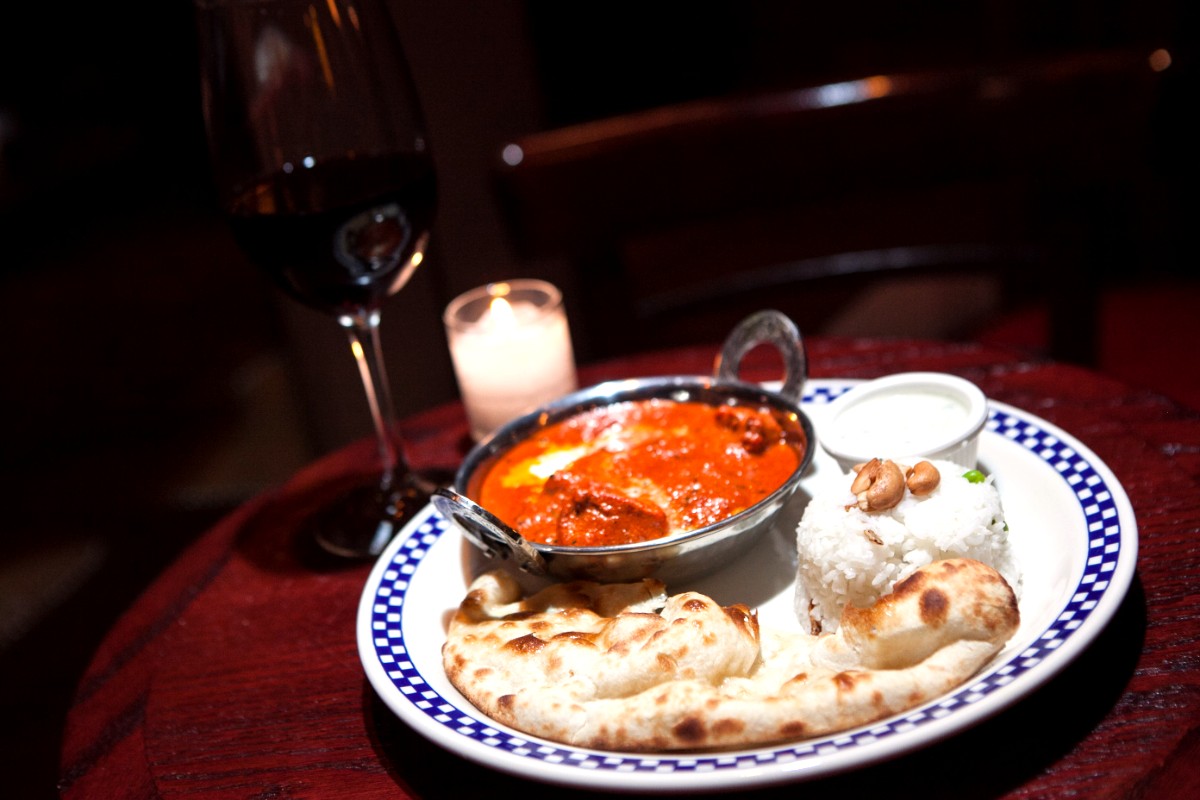
Butter Chicken Tikka Masala, 338 East 92nd Street. The dish page has the longer account.
Pandara Road, at midnight
Delhi has a place you go for this after dark. Pandara Road Market sits off India Gate, a row of shopfronts allotted under the Partition rehabilitation scheme to families who had arrived from the west with nothing. Gulati opened there in 1959 and made butter chicken its signature. Rahul Verma, The Hindu’s long-standing food critic, remembers when Delhi was a hick town and Pandara Road one of the few places to go late at night for a rich meal.
That is where Arun and I went. As kids, butter chicken was what the two of us went out for in the middle of the night. He would roll out in his dad’s van once everyone in the house was asleep, and the boys would drive to Pandara Road for a midnight snack. We would order chicken tikkas and pour butter chicken sauce over them.
That was the whole invention. We were not the first and we knew it. The occasional visits soon became weekly runs for BCTM.
The runs ended the way these things end. Arun’s father kept finding the van at empty, more than once, and stayed up one night to find out who was siphoning the fuel.
Which is why ours is called both
We took the honest route and named it on the menu after what it is: Butter Chicken Tikka Masala.
Butter Chicken Tikka Masala was not arrived at in a test kitchen. Two boys took a van out to Pandara Road once the house was asleep, ordered chicken tikkas, poured butter chicken sauce over them and drove home. The dish on our menu is that order, written down and given six hours.
The chicken is fired in the tandoor. The sauce is a tikka-masala base, tomato with a full spread of spice behind it rather than tomato with cream in front of it, and the butter and cream go in last, off the heat.
Six hours is not a figure of speech. The pot sits on the back burner all service long, taking in the flavour of everything going on around it. A sauce cooked for twenty minutes tastes like tomatoes with spices in them; six hours later it has stopped tasting of tomato and started tasting of itself, rounder and darker and sweet without anybody having added sugar.
Underneath it is the part we do not print. There is magic in a base sauce built on onions: flavour and thickness, without the fat. That is the philosophy, and as much of it as anyone gets. It is also why ours is neither one dish nor the other. Butter chicken takes its body from cream; ours takes it from onions and its sweetness from time.
There is a longer account of how ours is put together on its own page. As for which is better — it is the wrong question, and it is usually asked by people who have only met the pale, sweet, cream-thickened version of either. The right question is whether the chicken saw a tandoor, and whether anybody was willing to give the sauce an afternoon. Get those two right and the name on the menu stops mattering very much.
What is the difference between butter chicken and chicken tikka masala?
Butter chicken is milder and sweeter: tandoori chicken in a sauce of tomato, butter and cream. Chicken tikka masala uses the same tandoor-fired tikka in a more heavily spiced onion-tomato sauce. Butter chicken was invented in Delhi; tikka masala was most likely invented in Britain.
Is butter chicken spicy?
Not usually. It is the gentler of the two by design — the sauce was invented to rescue dry tandoori chicken rather than to carry heat. Any decent kitchen will spice it up if you ask.
Is chicken tikka masala Indian or British?
Contested, honestly. The best-known account places it at the Shish Mahal in Glasgow in the 1970s, though the famous tomato-soup detail in that story was invented as a joke by two food writers and then repeated as fact for years. Chicken in a spiced tomato gravy long predates all of it in Punjab. What is not in dispute is that the dish as most of the world eats it was standardised in British curry houses.
Which came first, butter chicken or chicken tikka masala?
Butter chicken. It comes from Moti Mahal in Delhi, which opened in 1947, though which of its three founding partners invented the dish is still being litigated in the Delhi High Court. The earliest claim for chicken tikka masala is the 1970s.
Which one does The Drunken Munkey serve?
Both, in one dish. Ours is tandoor-fired chicken tikka in a tikka-masala sauce that sits on the back burner for about six hours across service, finished with butter and cream — which is why it is called Butter Chicken Tikka Masala.